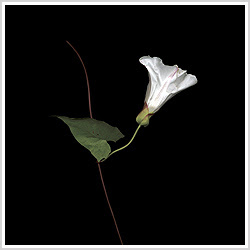
In my previous post I mentioned how I had attempted to photographs limbs, mostly arms, to attempt to create a parallel between them and the plants, I did not feel that this comparison was clear, despite using the same medium and lighting them similarly. To try to draw out the parallels, at first simply in the aesthetics, I began to place them next to each other, to juxtapose. The images seemed to highlight the similarities of the images, the leading lines in each images matched fairly closely, as can be seen in the image below, but I began to realise that, whereas the photographs of flowers trailed off quite organically into the darkness, it was far more difficult to apply this to limbs, which lead to the edge of the frame cutting off the arm at some point.

I felt that the more I experimented with placing these arms next to the flowers the more macabre and tense the results. The framing of the arm and the way the edges cut the limbs began to look more like dismembered limbs and the reaching fingers, instead of looking like fronds of a tree or blades of grass, began to look like the searching hands of zombies from some Romero film. As well as this the tension between the two images, particularly above, wherein the left contains quite a powerful and forceful image and the right contains a low-key and quite calm image (when viewed on its own) further added to the idea that these two images had come together and created a third meaning. 


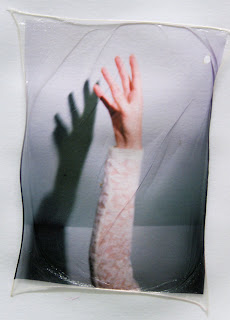 The transparency of the emulsion lifts began to interest me, they seemed almost like over-sized projection slides and I began to experiment with the idea of projecting them. I affixed one image to a sheet of acetate as can be seen below. I plan to attempt this with a few other emulsion lifts and look at the results of projecting them using an OHP. They take on another quality once the light shines through them, harkening back to stained-glass windows, whilst still holding onto the fragile, brittle and low-tech elements which I have continued from my previous work.
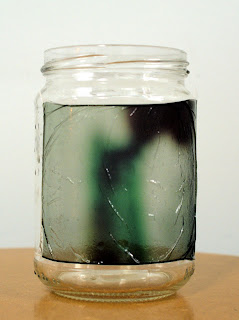
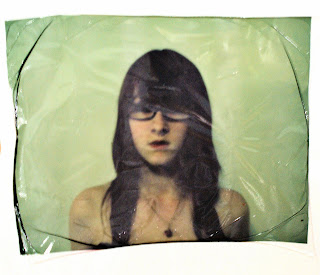 My next use of the emulsion lift was to place the image onto a glass jar. This continued from my previous ideas about the transparency and the way the light changed the image as it shone through it. I chose to use a glass jar because of the transparent and fragile qualities as well as the idea of preservation, historically in towards the end of summer and the beginning of autumn families would preserve food, jams, fruits, vegetables, in glass jars as foods through the winter. As well as this there is the idea of preserving collections, such as insects, behind glass. In a museum we begin look at tableaus of dead animals, stuffed and arranged behind glass.